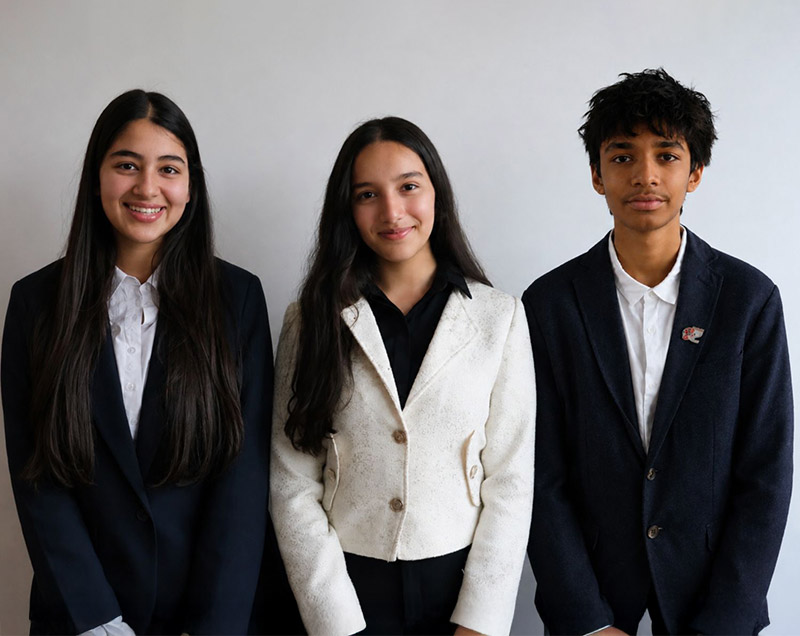
President of SOCHUM : Kaira Desai
Deputy President of SOCHUM : Samika Khanna and Arnav Gupta
“The true measure of any society can be found in how it treats its most vulnerable members.”
- Mahatma Gandhi
Dear Delegates and MUN Directors,
In an era defined by armed conflicts, climate disasters, mass displacement and political instability, humanitarian crises are becoming increasingly devastating in both scale and consequence.
Yet beyond the visible destruction lies a darker reality: vulnerable communities are often left exposed to exploitation, violence and systemic neglect. From children displaced by war to victims trapped in trafficking networks, humanitarian emergencies today demand not only immediate relief, but also coordinated international action that protects human dignity and fundamental rights.
In such fragile circumstances, the United Nations General Assembly’s Social, Humanitarian and Cultural Committee, SOCHUM, plays a pivotal role in strengthening global humanitarian responses, safeguarding vulnerable populations and fostering international cooperation in the face of escalating crises.
Our first agenda, “Responding to the rise of human trafficking and organ trade linked to transnational criminal networks during humanitarian crises,” confronts delegates with one of the most alarming and rapidly expanding humanitarian crimes of the modern era. In regions devastated by conflict, displacement and economic collapse, vulnerable populations are increasingly being exploited by organized criminal syndicates that profit from forced labour, sexual exploitation and the illegal trade of human organs. Delegates will examine how humanitarian crises weaken legal systems and border security, enabling trafficking networks to flourish across regions and continents.Through diplomacy and multilateral action, delegates will work towards creating comprehensive and human-centered solutions that protect vulnerable communities while dismantling transnational criminal networks.
Our second agenda, “Addressing the social and humanitarian impacts of artificial intelligence and automation on employment and livelihoods,” examines the growing challenges posed by rapid technological advancement. Delegates will discuss the humanitarian, social and economic problems of job displacement due to automation, the effects of artificial intelligence on labour rights, working conditions and mental-health, and how unequal access to AI deepens global inequalities and social divisions. The committee will work towards creating balanced and inclusive solutions that ensure technological progress benefits all sections of society.
Our third agenda, “The question of protecting vulnerable children displaced by the Myanmar civil war,” confronts delegates with one of the most heartbreaking humanitarian crises unfolding today. The escalating conflict has torn families apart, leaving thousands of children wandering border zones without parents, exposed to traffickers, violence and psychological trauma. Delegates will examine the massive scale of child displacement amid airstrikes and sieges, confront the trafficking dangers emerging along the Thailand and India borders, and address the long-term psychological and educational consequences faced by displaced children. As instability deepens within Myanmar, the committee must collaborate to create sustainable humanitarian solutions that prioritize child protection, refugee support systems, access to healthcare and education, and international accountability.
SOCHUM at DAIMUN 2026 promises to be a platform for compelling diplomacy, powerful debate and transformative solutions. As delegates confront some of the world’s most urgent humanitarian crises, they will be challenged to look beyond temporary relief and tackle the deeper systemic inequalities, humanitarian failures and global inaction that allow such suffering to persist. Through collaboration, empathy and innovative policymaking, delegates will not only debate global issues, but also shape meaningful solutions that uphold justice, restore dignity and safeguard the lives of the world’s most vulnerable populations.
Warm Regards,
Kaira Desai
Head Chair of the Social Humanitarian and Cultural Committee,
Samika Khanna and Arnav Gupta
Deputy Chairs of the Social Humanitarian and Cultural Committee
DAIMUN 2026