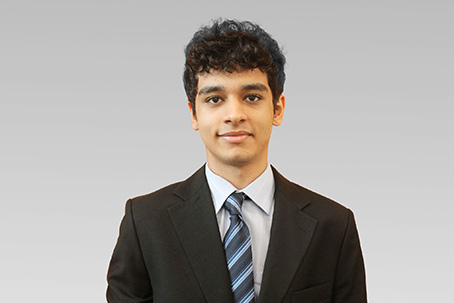
Deputy Secretary-General : Shivank Bhatia
“More than ever before in human history, we share a common destiny. We can master it only if we face it together.”
- Kofi Annan
Dear delegates and MUN directors,
Before every resolution is drafted, every clause is negotiated, and every summit is convened, there is one question that comes first: not what must be done, but who is responsible for doing it.
This is one of the oldest problems in international relations. Responsibility is spread across so many actors that accountability disappears, and urgent action is endlessly delayed.
This is not a failure of knowledge. We already have the data on climate displacement, widening inequality, and the erosion of multilateral institutions. We have frameworks, precedents, and rhetoric. What we continue to lack is a system of genuine shared responsibility.
Shared Responsibility, Collective Progress is not simply an aspirational slogan. It is a structural argument: that meaningful progress cannot be achieved in isolation. A nation’s advancement, if built on another’s stagnation, is not progress but displacement. A solution created without the voices of those most affected is not truly a solution, but an imposition. The real measure of global governance lies not in the sophistication of its documents, but in the sincerity of its commitments.
Yet shared responsibility remains one of the most misunderstood ideas in modern diplomacy. It is often mistaken for equal responsibility, the idea that every actor should bear the same burden, regardless of capacity, history, or culpability. This misunderstanding has stalled climate negotiations, weakened development finance, and allowed powerful states to hide behind the language of universalism while avoiding accountability. True shared responsibility is differentiated. It expects more from those who have more to give. It distributes obligations not equally, but equitably: a distinction that may seem small in language, but is enormous in practice.
This theme is especially urgent because of the moment we are living in. We are witnessing a decline in trust in multilateral institutions, the rise of a zero-sum mindset, and the quiet normalization of inaction disguised as sovereignty. In such a world, the case for collective progress is not only moral, it is strategic. Pandemics do not stop at borders. Economic shocks do not respect trade blocs. Climate tipping points are indifferent to GDP. The very interdependence that makes collective action difficult is also what makes it necessary.
At its best, DAIMUN does not merely simulate this complexity, it challenges delegates to confront it. The committees assembled this year reflect the tensions that define real international decision-making: between national interest and global obligation, between short-term political cost and long-term systemic benefit, and between the states that write the rules and the states that live under them.
I ask something specific of every delegate: do not be satisfied with resolutions that sound ambitious but lack meaningful mechanisms. Do not allow consensus to become a substitute for substance. Some of history’s greatest diplomatic failures were not failures of negotiation, but failures of imagination: moments when those at the table could not envision an order different from the one they had inherited.
You are not here to inherit that order. You are here to question it.
The world does not lack summits, declarations, or frameworks. What it lacks is the political will to treat shared challenges as truly shared responsibilities to recognize that while the costs of inaction fall unevenly, the burden of response must be distributed fairly. Turning that recognition into concrete, inclusive, and enforceable policy is what collective progress really means.
Approach your committees with the rigor of a negotiator and the conscience of a global citizen. Speak with precision. Listen with intent. And when the temptation arises to settle for a resolution that merely sounds right instead of one that can actually work, resist it.
In the end, the goal is not applause, but impact. Welcome to DAIMUN 2026.
Warm Regards,
Shivank Bhatia
Deputy Secretary-General
DAIMUN 2026