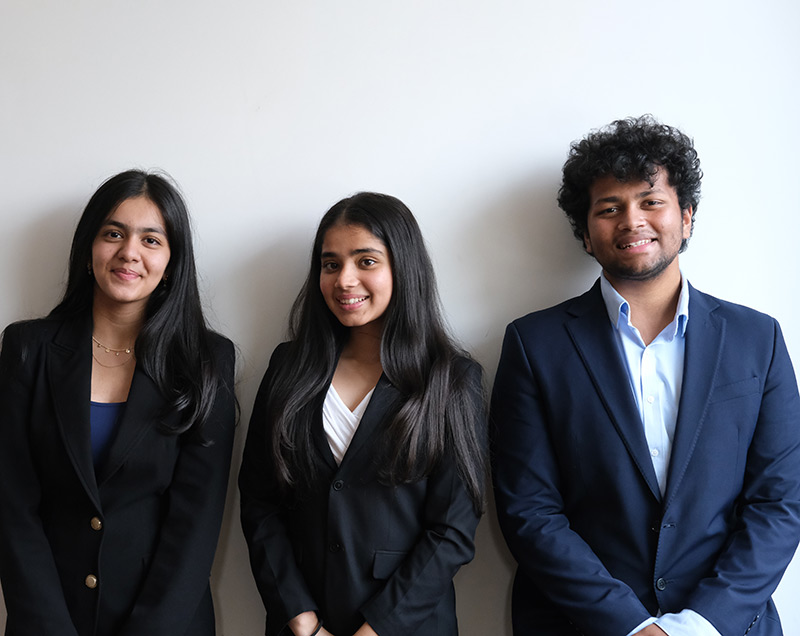
President of HRC : Sara Hulyalkar
Deputy Presidents of HRC : Arishka Betadpur and Akaash Das
Dear Delegates and MUN Directors,
In an era marked by escalating conflict, political instability, and deepening social inequalities, the protection of fundamental human rights has become more urgent than ever before. Across the globe, millions continue to face persecution, violence, discrimination, and systemic abuse, often with limited access to justice or international protection.
As humanitarian crises intensify and state as well as non-state actors challenge the principles of dignity and equality, the Human Rights Commission 1 (HRC 1) remains at the forefront of safeguarding human rights, promoting accountability, and fostering international cooperation.
Our first agenda, “Addressing Human Trafficking and Forced Criminality in Cyber Scam Compounds in Southeast Asia,” calls attention to one of the fastest-growing and most disturbing forms of modern exploitation. Hidden behind the façade of rapidly expanding cyber industries are trafficking compounds where vulnerable individuals, particularly migrant workers, are subjected to sexual violence, torture, forced labour, and inhumane punishment mechanisms. Delegates will be challenged to examine the broader human rights implications of these compounds, evaluate the failures of international protection systems, and formulate collaborative solutions to combat trafficking networks while ensuring justice, rehabilitation, and protection for victims.
Our second agenda, “Deliberating upon the impact of proxy wars as contributing factors to mass pogroms and persecution of minorities, specifically in the MENA region,” requires delegates to confront the devastating intersection of geopolitics and human suffering. Proxy conflicts across the MENA region have fuelled sectarian violence, ethnic cleansing, and widespread abuses committed by armed militias and non-state actors. Minority communities continue to endure targeted persecution, displacement, and denial of their most basic rights. Through this agenda, delegates must critically analyse the role of external intervention, explore mechanisms for accountability, and develop frameworks that prioritise civilian protection, peacebuilding, and the preservation of minority rights amidst conflict.
Our third agenda, “Addressing the Human Rights Implications of Statelessness Among the Rohingya Population in Bangladesh,” invites delegates to explore one of the most pressing humanitarian crises of the modern era. The denial of legal identity and citizenship has left millions of Rohingya individuals vulnerable to systemic discrimination, displacement, and exclusion from fundamental rights. Statelessness has severely restricted access to education, healthcare, employment, and legal protection within refugee settlements, perpetuating cycles of poverty and insecurity. Delegates will be expected to assess the responsibilities of states, examine the role of international organisations and regional cooperation, and develop sustainable frameworks for protection, repatriation, and long-term humanitarian solutions while upholding the dignity and rights of displaced populations.
HRC 1 at DAIMUN 2026 will serve as a platform where compassion meets diplomacy and where difficult conversations inspire meaningful change. The committee will thrive on nuanced debate, diverse perspectives, and innovative policymaking as delegates tackle some of the most urgent humanitarian concerns facing the international community today. Through critical discussion and collaborative problem-solving, delegates will not only deepen their understanding of global human rights challenges, but also emerge as advocates for justice, accountability, and human dignity.
Warm Regards,
Sara Hulyalkar
President of the Human Rights Commission 1,
Arishka Betadpur and Akaash Das
Deputy Presidents of the Human Rights Commission 1
DAIMUN 2026